- 3
- 0
- 0
How Ukraine’s Financial Digital Audience Is Changing: Insights from the CEO of CPA Network SalesDoubler
The Ukrainian digital market can already be described as fully mobile-first. For a large part of the audience, smartphones have become the main device people use to consume content, search for information, pay for purchases, access government services, and use financial products.
For affiliates, knowing only the age and region of their audience is no longer enough. Campaign performance is also affected by the device, operating system, ad format, and even the complexity of the financial product itself. A user looking for a microloan on a smartphone and an entrepreneur choosing a bank account on a laptop have completely different behavior patterns. Therefore, the same traffic acquisition strategy will not work for both.
Oleksandr Boiko, CEO of CPA network SalesDoubler, shared with the editorial team how these changes are affecting the financial vertical and the way affiliates work with traffic. He has more than 15 years of experience in the financial sector and extensive expertise in financial products and digital marketing.
According to him, simply driving traffic to an offer is no longer enough to work effectively with the financial vertical. It is important to understand which device the user comes from, how they are used to interacting with financial services, and how complex the journey is from the first contact with an ad to the target action.
The Ukrainian Audience Has Almost Completely Shifted to Digital
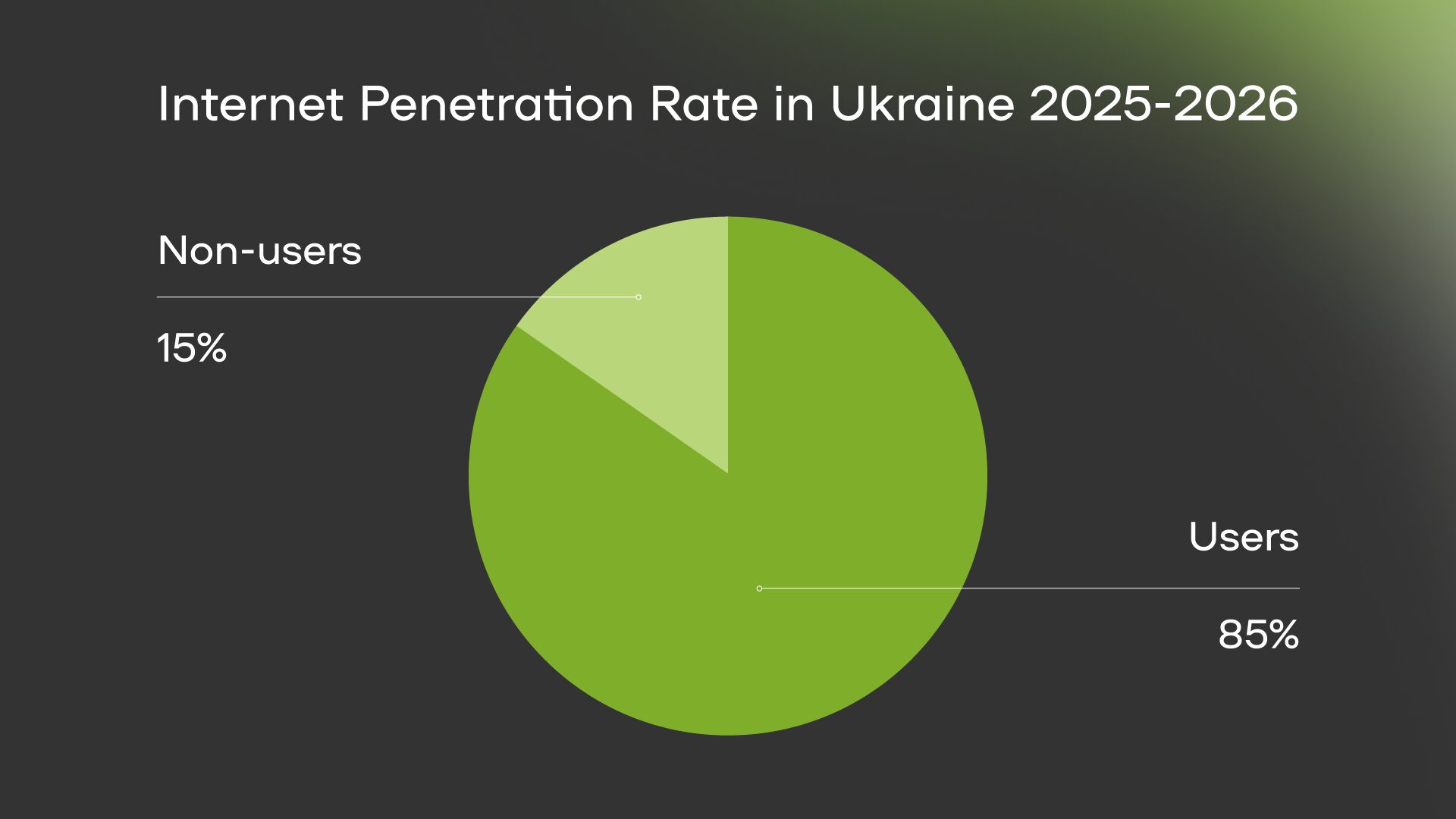
Internet penetration in Ukraine in 2025–2026 is estimated at approximately 82–90% of the population, while among people aged 15–54 it is close to its maximum level.
At the same time, smartphones are playing an increasingly important role. Around 92% of the active internet audience uses smartphones, while the number of mobile connections exceeds the country’s population because many users have more than one SIM card. In the past, the user journey could look like this: a person saw an ad, visited a website from a computer, and filled out an application. Today, a large part of this journey takes place on a single screen. A user sees an ad on a social network or messenger, goes to a landing page, completes verification, and gets a financial product. All of this can happen on a smartphone.
The Smartphone Has Become the Main Entry Point to Financial Products
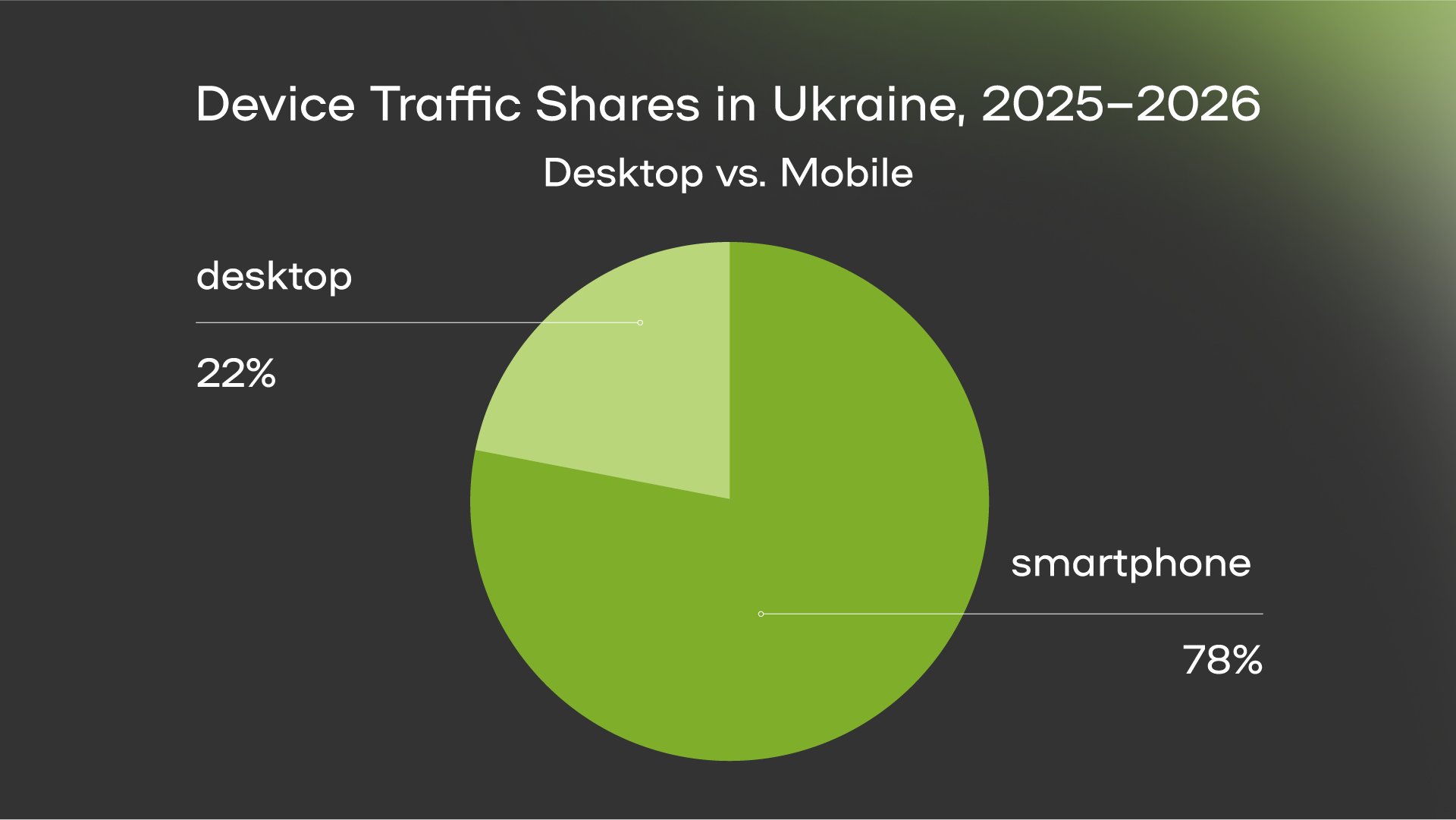
The overall distribution of internet traffic in Ukraine shows a clear dominance of mobile devices: approximately 78% comes from smartphones and around 22% from desktop.
Despite this, for affiliates it is much more important to look not at the market average, but at the specific financial product. The simpler the action and the shorter the path to conversion, the greater the role of smartphones usually is.
- In the debit and credit card segment, the share of mobile traffic can reach 92%. The reason is clear. The banking product itself has become mobile. A user follows a link, installs an app, completes identification, and starts using the card with almost no need to open a laptop.
For promoting such affiliate programs, the mobile UX of the landing page, loading speed, and a minimum number of unnecessary steps directly affect conversion.
- In the microloan segment, mobile traffic accounts for approximately 85%. Here, a different behavior pattern applies. Users often look for a financial solution at a specific moment, so a long customer journey can only reduce the likelihood of conversion.
Every additional step between the click and the application can potentially increase drop-off. Therefore, for this type of affiliate program, it is especially important to have a clear offer on the first screen, a simple application form, and as few distracting elements as possible.
The Role of Desktop Traffic Has Changed
The dominance of smartphones does not mean that desktop traffic is no longer important for the financial vertical. On the contrary, the more complex and expensive the financial product is, the greater the role of the desktop can be.
For example, for individual entrepreneur accounts and small business products, the ratio can be approximately 45% mobile versus 55% desktop. Entrepreneurs find it more convenient to work with documents, electronic signatures, and financial information on a larger laptop screen than on a smartphone. The difference is even more noticeable for long-term products such as mortgages or car loans, where the share of desktop traffic can reach 70%.
Simply put, the faster a user makes a decision, the greater the role of mobile. The more information they need to analyze before conversion, the more important the desktop remains.
Why Does the Operating System Matter Too?
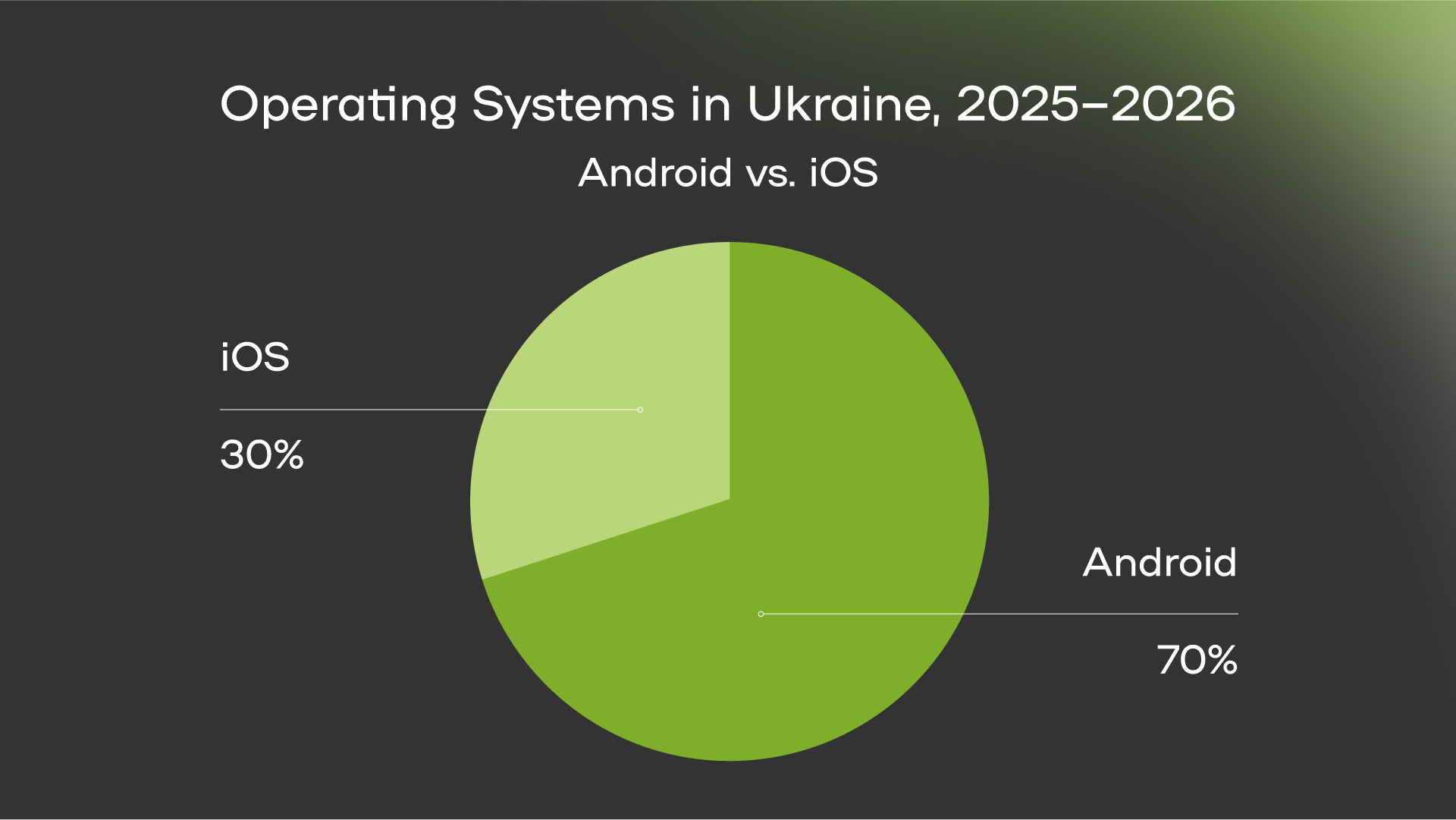
Another factor worth considering when working with financial traffic is the operating system. In Ukraine, Android continues to hold the largest share of the mobile market at 70%. At the same time, the share of iOS is also quite high at 30%.
For affiliates, however, the difference between the audiences of these platforms is more important than the platform split itself.
- Android has wider penetration across the country and a stronger presence in the regions and smaller cities. In the financial vertical, this audience is especially interesting for mass-market products such as payday loans, debit cards, or everyday financial services. The main advantages of Android traffic are its larger available volume and lower acquisition cost compared to iOS.
- iOS has a stronger presence among younger urban audiences. According to the available data, these users may have a higher average transaction value, but their acquisition cost can be 40–60% higher than for Android users.
It is important to consider the product being promoted. A more expensive click does not necessarily mean lower-quality traffic. For products such as credit limits, deposits, investment services, Ukrainian government bonds, or individual entrepreneur accounts, more expensive iOS traffic can make up for its higher cost with better audience quality. That’s why affiliates should evaluate not only CPC or CPI, but the entire journey to the final target action.
Where the Financial Audience Spends Its Time
Changes are happening not only at the device level. The way Ukrainians consume media has also changed. Digital has become the main environment where users get information, watch videos, communicate, search for products, and interact with financial services.
According to statistics, the average Ukrainian spends around 6 hours and 45 minutes online per day. A significant part of this time is spent on video content, social media, messengers, and news. Telegram, YouTube, Google, Instagram, and Facebook are among the channels with the largest reach. This means that the customer journey is becoming longer. A person may first see a financial product mentioned on Telegram, watch a review on YouTube, search for feedback on Google, visit a comparison website, and only then submit an application. As a result, the competition is no longer just for the click. It is about being present at different stages of the decision-making process.
The 55+ Audience Has Become a Segment That Should Not Be Ignored
One of the most noticeable changes in recent years is the growing digital adoption among older audiences. While younger age groups are already almost completely online, internet and smartphone penetration among Ukrainians aged 55+ is estimated at around 65–70% and continues to grow.
For this audience, smartphones have long been used for much more than just calls. Viber, YouTube, Facebook, government services, and mobile banking have become a regular part of everyday smartphone use. For the financial vertical, this creates a separate audience segment that may not respond well to the same creatives used for people aged 25–35. Simple product explanations, a clear interface, larger page elements, and stronger trust factors may work better for this audience.
High Digital Penetration Creates an Unexpected Problem
At first glance, internet penetration of almost 90% seems like entirely positive news. However, there is another side to it. When almost the entire potential audience is already online, finding new users becomes increasingly difficult.
Ukraine’s financial digital market is moving from a stage of rapid growth to a stage of intense competition for users who are already online.
Banks, microfinance organizations, marketplaces, and other advertisers are essentially competing for the same users in advertising auctions. This leads to several consequences:
- CAC increases
- paid traffic becomes more expensive
- organic growth slows down
- users who are already familiar with the product return more often
As a result, the role of affiliates is gradually changing. In the past, simply having access to a large volume of traffic could be a competitive advantage. Now, the ability to find the right user, choose the right offer, and lead them to the target action is becoming increasingly important.
In these conditions, CPA networks are also becoming more important. Affiliates do not necessarily need to search for advertisers on their own, negotiate partnerships with each of them, and spend time checking potential partners. Working through a CPA network gives them access to selected advertisers and offers in one place.
At SalesDoubler, the financial vertical is one of the key areas, so the network offers a wide range of financial offers. At the same time, affiliates get more than just access to affiliate programs. The network’s managers can help with offer selection and work-related questions, while the available tools can simplify campaign launch, tracking, and optimization.
Financial Traffic Is Becoming More Expensive, but No Less Attractive
Ukraine’s digital market is already well established. Most of the audience with purchasing power is online, smartphones have become the main device, and financial transactions are increasingly taking place entirely in the digital environment.
At the same time, the maturity of the market makes user acquisition more challenging. Affiliates are competing for an audience that has already seen dozens of banking and lending offers, uses several financial services, and can easily compare their terms.
Therefore, the next stage in the development of financial affiliate marketing is about understanding the different contexts in which users make financial decisions. This helps build more targeted advertising strategies and find new growth opportunities even in a highly competitive market.

- 3
- 0
- 0
- By rating
- In order